Better Way To Revisit Our Core Beliefs
I wish I were writing this piece at a time of my own choosing, and not because of what’s on the news. I wish we had a better way to think deeply about and discuss the relevance of our core beliefs. Beliefs that shaped our conduct and values over centuries and continue to do so. Beliefs that are reinforced by stories often repeated across generations. Beliefs that have now become part of a collective conscience that extends over our culture as a protective shield. One such belief, upholding honor at any cost, was recently dragged into an unnecessary episode of scrutiny.
Without context or care, someone said something problematic about a scene in a film, a film that was problematic to begin with. It was a statement optimized to gain attention and provoke, and that’s exactly what it did. The reason the statement sparked anger in many of us was that it didn’t stop at questioning a film scene but tried to raise questions about a practice that stands as the absolute epitome of supreme sacrifice: Jauhar.
The purpose of this piece is not to drag the argument further or give its principal actors any more attention than the 24-hour news cycle showered on them. But in reflecting on my own initial reaction to the statement, and the reactions of many others, I came to face another question: why must we be compelled to revisit our core beliefs only when someone says something out of line? What if there was a better way to think about traditions and culture, an ongoing discourse that reinforces and renews our core beliefs for different generations and in multiple perspectives? Such an ongoing discourse would form a protective layer, and often diffuse statements before they become arguments, and settle arguments before they become controversies. This way, no tempers are lost unnecessarily, and no inconsequential actors are given more attention than they deserve.
Growing up in Rajasthan in the 1980s, we had the benefit of such a discourse. The stories of Jauhar, for example, weren’t just in school textbooks, but also featured prominently in conversations at home and neighborhoods. While there are many examples of personal valor and bravery in our myriad stories, Jauhar has a haloed place as a way to protect honor in the face of certain defeat.
For marauding armies, it was unlike anything they had seen or heard before. After defeating valiant but outnumbered armies of saffron-clad Rajput warriors, the supposed victors strode into forts hungry for opportunities to subjugate, humiliate, or mutilate, but a glowing fire pit denied them any sense of triumph. As an act of bravery, this was in no way second to brandishing a sword while riding into battle.
For entire generations, stories of such events didn’t just instill pride in the past, but also laid out the basic principles, the core beliefs that define a community. If Jauhar and Saka were about the supreme sacrifice, there were other stories that established the importance of keeping one’s word at all costs, protecting someone who seeks refuge in your home, putting the motherland’s interests before your own and so on. Stories like these helped create exemplars of the Kshtriya and the Kshtrani, personas that defined how we took on life’s circumstances. Sure, there were no more forts to storm or battles to fight or invaders to protect oneself from, but there was no shortage of situations that demand courage and the ability to look beyond personal interest. And the past, as part of our source code, guided our choices and actions.
In today’s day and age, when there’s a platform and an audience for every voice, it has become customary to bring up vignettes from the past and look at them through a 21st century lens. The problem is, most of these conversations or forays aren’t intended at genuinely finding new meaning or relevance, but instead to spark outrage that draws a disproportionate amount of attention. News channels, with their insatiable hunger for issues and panel discussions, fuel this fire, which soon spreads to social media, or the other way around.
Without the benefit of ongoing and positive discourse, which only families and communities can provide, such instances can snowball unnecessarily. In this case, the scene in the film was a mere proxy. The film itself was purported to be based on a ‘fictional’ novel, which was inspired by true events. But this elaborate trail deceives no one. To bring up Chittorgarh and its Jauhar, and to talk about those events using words like ‘victimhood’ or ‘cowardice’ is a blatant attempt to trigger, enrage, and engage. This is not the first time such an effort was made, and it wouldn’t be the last. Our response should not be to rebuff, challenge or rebuke but instead to simply ignore.
But that’s where my concern is. For my generation and the one before me, we have the benefit of a positive discourse, a protective shield, if you will, that allows us to easily ignore such statements. For younger generations, however, the risk of being drawn into such debates is significantly higher. By using vocabulary that appeals to their ideologies, such controversies may lead them to misunderstand, misinterpret, and misjudge their own history. We shouldn’t let that happen.
Let’s revisit our core beliefs from time to time, with younger people in our families, and have open conversations about context, relevance and intent. If there’s a story from our heritage that has guided you in life, talk to someone younger about it. We need more conversations, face to face or device to device. We’re all custodians of culture and it’s our duty to preserve our endless sources of inspiration.

ABOUT THE AUTHOR
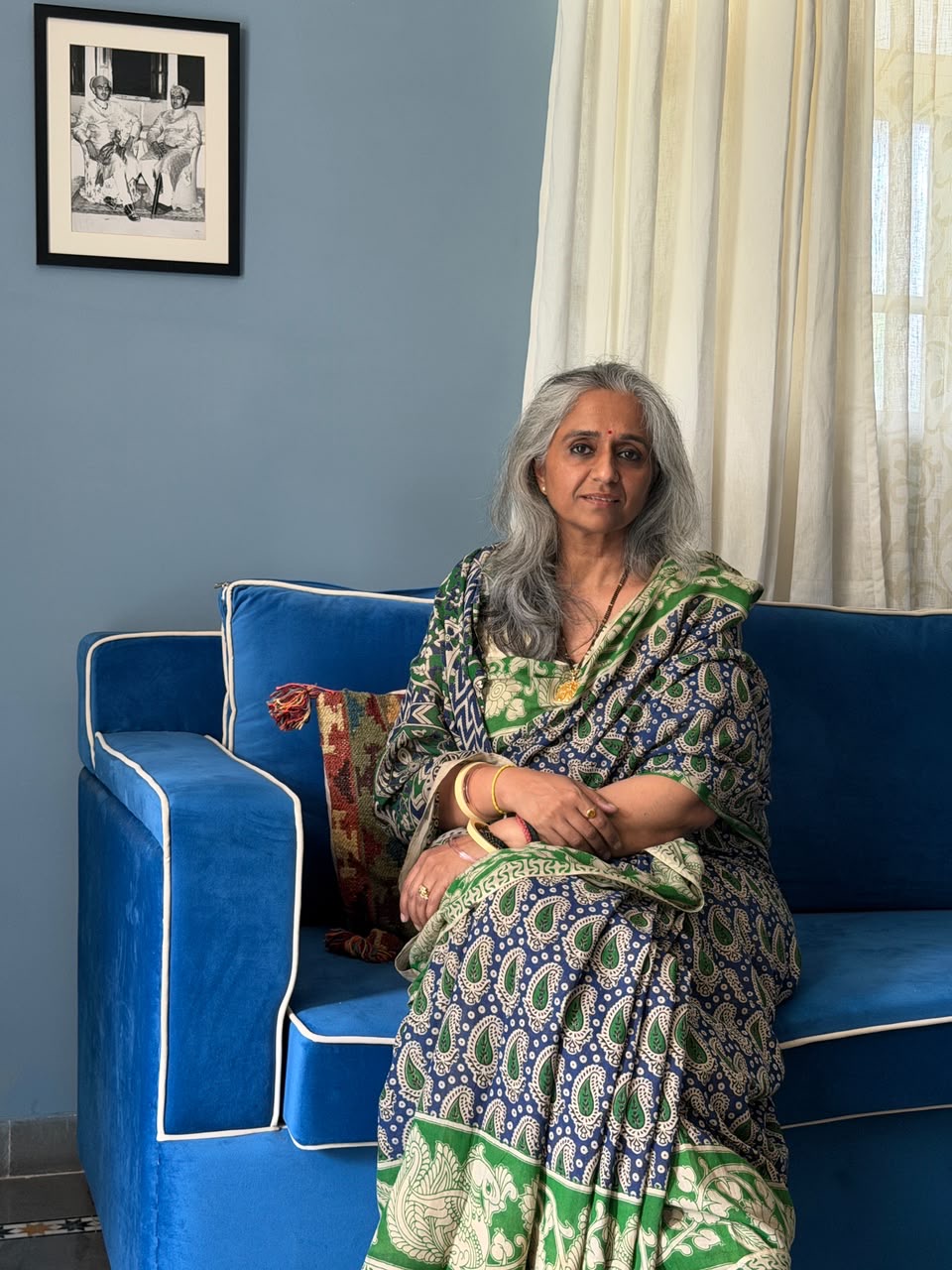
Tripti Singh is a Heritage Evangelist & TEDx Speaker & the founder of Gathjor - Rajputana Customs & Weddings.
She's also the creator of the event franchise Ghoomar: Twirl with Grace, a bespoke event steeped in Rajasthani culture.
A big believer in the power of networks, Tripti lives in Gurugram.


Comments